
AI Small App
Building a useful AI app is only half the job. The other half is earning steady income from it. If you want to monetize AI apps without losing money on model costs, you need a pricing plan that fits how your product is used. This guide covers AI app monetization options for small apps, from subscriptions to credits, using the practical lens Technexia applies when helping founders turn prototypes into revenue.
Why Should You Monetize AI Apps Differently?
Traditional software costs almost nothing per extra user. AI apps are different because every request can trigger a model fee. That means when you monetize AI apps, your pricing must protect your margins as well as attract customers. Keep these differences in mind:
- Variable costs: Each action may cost real money
- Uneven usage: A few heavy users can generate most of your costs
- Changing model prices: Costs shift over time, so pricing needs regular review
- Value-based demand: Customers pay for results, not tokens
A strong AI SaaS revenue model balances predictable income with fair, usage-aware limits.
How Can a Small AI App Generate Recurring Revenue?
Recurring revenue comes from repeat value. The most common approaches are:
- Subscriptions: Monthly or annual plans for ongoing access
- Usage pricing: Customers pay for what they use
- Credits: Prepaid bundles spent on specific actions
- Hybrid plans: A subscription with included usage and paid top-ups
- Add-ons: Extra features, seats, or integrations
How Do Subscriptions Work?
AI subscription pricing gives customers a simple, predictable bill and gives you predictable income. Keep it clear:
- Tiered plans: Offer a few plans, such as Starter, Pro, and Team
- Usage allowances: Include a fair limit in every plan
- Annual discounts: Encourage longer commitments and upfront cash
- Feature gating: Reserve advanced features for higher tiers
- Overage rules: Explain what happens when limits are reached
The main risk is heavy users on flat plans, which is why limits matter.
Should You Charge Per User or Usage?
Both can work, depending on how your app creates value. Usage-based pricing ties revenue to cost, which protects margins:
- Per-user pricing: Simple and predictable, best when each person gets steady value
- Usage pricing: Fair and margin-safe, best when consumption varies widely
- Hybrid pricing: A base fee per user plus included usage and paid extras
To monetize AI apps with variable demand, hybrid pricing is often the safest starting point.
How Do Credits Work?
Credits are prepaid units customers spend on actions, such as generating a report or processing a document. When you monetize AI apps with credits, billing becomes easier to explain:
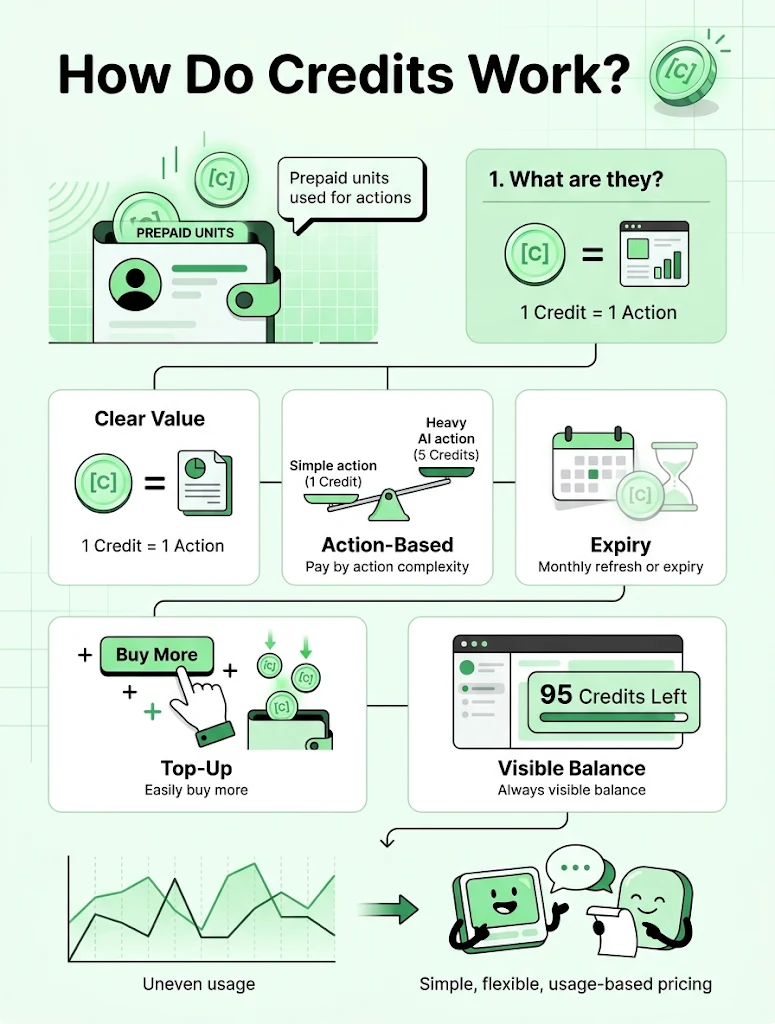
- Clear value per credit: Define exactly what one credit buys
- Action-based costs: Charge more credits for expensive actions
- Expiry rules: Use monthly refreshes or expiration dates to manage balances
- Top-up options: Let users buy more when they run out
- Visible balance: Show remaining credits at all times
Credits suit apps with uneven or hard-to-predict usage, and they make usage-based pricing easier for customers to understand.
How Do Free Trials Work?
Free trials let people experience value before paying, but AI makes them costly. Founders who monetize AI apps successfully treat the trial as a cost to measure and control:
- Limited trial credits: Offer a fixed allowance rather than unlimited use
- Short time windows: Seven to fourteen days is common
- Account verification: Reduce abuse and repeat sign-ups
- Quick access to value: Let users reach the main benefit fast
- Clear upgrade prompts: Show when and how to continue
Freemium plans can work too, but cap usage tightly so free users do not erase profit. Good AI subscription pricing makes the step from trial to paid plan feel natural.
How Do You Manage Inference Margins?
Margin is the difference between what customers pay and what the model costs you. To monetize AI apps profitably, track it closely:
- Cost per user: Measure model spending for each customer and plan
- Target margins: Set a minimum margin and price plans to stay above it
- Cheaper models: Route simple tasks to smaller models
- Caching and short prompts: Reduce tokens per request
- Usage caps: Prevent runaway spending from heavy users
- Regular reviews: Update prices as model costs change
How Technexia Can Help
Technexia helps founders monetize AI apps with pricing that supports growth, from choosing an AI SaaS revenue model to setting trial rules, credit systems, and margin tracking. With practical guidance and careful testing, Technexia helps you turn a useful tool into steady income.
Conclusion
Successful AI app monetization matches pricing to the value customers receive, protects margins with sensible limits, and improves through testing. Start simple, measure what users do, and adjust as you learn. Ready to monetize AI apps with confidence? Contact the Technexia team to plan your pricing strategy.
Frequently Asked Questions
How much should I charge for my AI app?
Start with the value your app delivers, then confirm that each plan covers model and hosting costs with a healthy margin.
Should I offer a lifetime deal?
Be careful. Model costs continue as long as customers use the app, so lifetime access can become unprofitable.
What happens when a customer exceeds their limit?
Common options include overage fees, upgrade prompts, slower service, or a pause until the next billing cycle.
Do I need special payment tools?
You need a payment provider that supports subscriptions, and ideally metered billing or credits if you charge by usage.
How often should I review my pricing?
Review it every few months or whenever model costs change, and consider protecting existing customers with grandfathered plans.