

AI Micro-SaaS vs Traditional SaaS: 6 Powerful Differences
Founders today face a real choice. Do you build a large platform that serves many needs, or a small, focused product powered by artificial intelligence? Interest in AI micro-SaaS is growing because small teams can now launch focused tools quickly, while a larger AI SaaS business often needs more funding and time. This guide compares the two paths on costs, revenue, and risk, with a perspective shaped by the products Technexia helps founders launch.
What Is AI Micro-SaaS?
An AI micro-SaaS is a small subscription product that uses AI to solve one narrow problem for a specific audience. It is usually built and run by one person or a very small team.
Typical traits include:
- Narrow focus: One job for one type of user
- Small team: One to three people
- Lean costs: Existing models and cloud tools do most of the heavy lifting
- Fast launch: Weeks or months, not years
Popular micro-SaaS ideas include invoice extractors, review reply assistants, and meeting summarizers. Each is simple AI subscription software that charges a monthly fee for one clear benefit.
How Do They Compare?
The two SaaS business models differ in scope, team size, and strategy:
- Scope: Micro products solve one problem, while traditional platforms cover many workflows
- Team: One to three people versus larger product, sales, and support teams
- Funding: Often self-funded versus frequently investor-backed
- Speed: Weeks to months versus many months to years
- Customers: Niche audiences versus broad markets
- Growth: Steady, profitable growth versus rapid scaling
What Are the Startup Costs?
Startup cost is one of the biggest differences. An AI micro-SaaS can often launch for a few thousand dollars, while a full platform usually needs far more. Treat any figure as a rough guide, because costs vary by team, region, and scope:
- Development: A solo builder or small team versus a full engineering department
- Model usage: Pay-per-use API fees that grow with your user base
- Hosting and tools: Modest for small products, substantial for large platforms
- Marketing: Content and community outreach versus dedicated sales teams
- Support and compliance: Light at first, heavier for enterprise customers
How Do Recurring Revenues Work?
Both models rely on subscriptions, where customers pay monthly or yearly for continued access. Common pricing structures include:
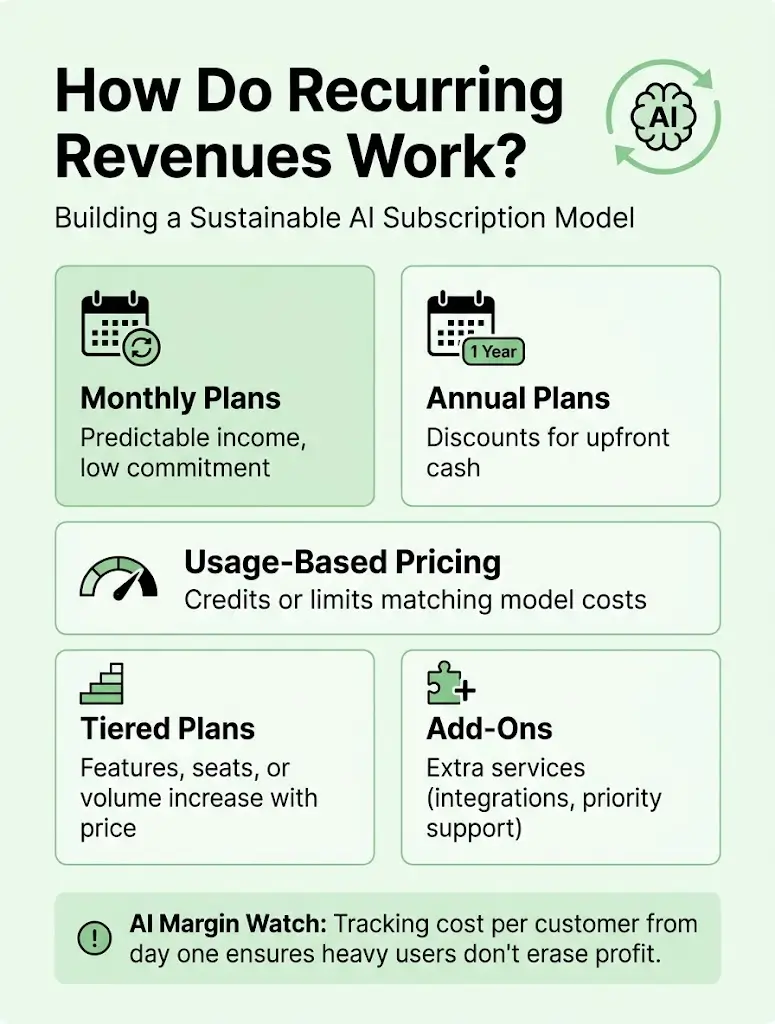
- Monthly plans: Predictable income and low commitment for customers
- Annual plans: Discounts in exchange for upfront cash
- Usage-based pricing: Credits or limits that match your model costs
- Tiered plans: Features, seats, or volume increase with price
- Add-ons: Extra services such as integrations or priority support
Because model fees rise with usage, AI subscription software must be priced carefully so heavy users do not erase profit. Tracking cost per customer from day one keeps margins healthy.
What Are the Risks of Model Dependency?
Relying on third-party models brings risks that every AI micro-SaaS founder should plan for:
- Price changes: A provider can raise rates and squeeze margins
- Quality shifts: Model updates may change outputs your product depends on
- Outages: Provider downtime can break your service
- Policy limits: Terms and data rules may restrict certain uses
- Commoditization: Competitors can access the same models
To reduce these risks, keep model code modular, test alternative providers, cache results, and build lasting value in your data, workflow, and user experience. Technexia often encourages founders to treat the model as a replaceable component rather than the product itself.
Which Business Model Is Better?
Neither of the SaaS business models wins in every case. The right choice depends on your goals, funding, and appetite for risk:
- Choose a micro product if: You want a quick launch, a lean budget, and a clear niche
- Choose a traditional platform if: You have funding, a larger team, and a big market to serve
- Consider a hybrid path: Start small, learn from customers, then expand
A well-run AI SaaS business can begin small, validate demand, and grow into a broader platform. Testing micro-SaaS ideas first costs little and shows what customers truly value.
How Technexia Can Help
Technexia helps founders compare business models, validate demand, and launch AI micro-SaaS products with confidence. From choosing models and planning pricing to building, testing, and scaling, Technexia offers practical guidance that keeps costs low and learning fast, so your first version becomes a business that lasts.
Conclusion
AI micro-SaaS offers speed, low costs, and focus, while traditional platforms offer scale and breadth. The better choice is the one that matches your resources and goals, and many founders succeed by starting small and growing from there. Ready to decide which path suits you? Reach out to the Technexia team to plan your next step.
Frequently Asked Questions
How much money do I need to start?
A simple product can launch for a few thousand dollars, mostly covering development time, hosting, and model usage.
Can one person run the business?
Yes. Many small products are run by a single founder using managed services and automation.
How long until I earn revenue?
Some founders earn their first sale within weeks of launch, but steady income usually takes several months of marketing and improvement.
How should I price my product?
Price based on the value you deliver, then confirm that each plan covers model costs with a healthy margin.
How do I find my first customers?
Start in communities where your audience already gathers, offer early access, and ask for feedback.